You Should Know is a monthly electronic newsletter that will help keep you on top of issues that could affect your health, safety and legal rights or those close to you.
Do you know how much liability insurance the State of Washington requires drivers to carry? $25,000.
That’s right, only $25,000. In some states, the limits are even lower. That might initially seem like a lot of money, but here is how it works – if a negligent driver injures you and they have only the minimum amount of liability insurance required, their insurance company can only pay you a maximum of $25,000, regardless of how badly you were injured or how badly the other driver behaved. For example, if you are injured by a drunk driver and need to have surgery, their insurance company will only pay you $25,000, regardless of the amount of your medical bills, regardless of how long you are unable to work, and regardless of whether you will ever fully recover. If the other driver doesn’t have a job, a home (with equity), or other assets, you won’t be able to get anything else. After all, “you can’t get blood out of a turnip.”
Since you can’t force other people to drive better or buy more insurance, how can you protect yourself? The answer is simple – purchase Underinsured/Uninsured Motorist (UIM) insurance. This insurance steps in and provides additional insurance to you if the person who causes your injuries has no insurance or not enough insurance. UIM insurance will also protect you if you are injured while you are a passenger in someone else’s car or if you are a pedestrian. It will even protect you if you are hit by a car while you are riding your bicycle!
UIM insurance is affordable and easy to buy – and your insurance rates should not go up if you need to use it. There are several different levels of coverage you can buy. The amounts start as low as $25,000 and go as high as $1 million. We believe that you should purchase $250,000 worth of UIM coverage. If you cannot afford this much insurance, please do not buy anything less than $100,000 of UIM coverage. This coverage is used to compensate you for all of your injuries and losses. This means that it covers your medical expenses (both the ones you’ve already incurred and the ones you may need in the future), your wage loss, and your “pain and suffering.” These losses can add up quickly, especially if you are badly injured.
We have seen too many people who were injured through absolutely no fault of their own, but who were unable to be fairly compensated because the person who injured them didn’t have enough insurance coverage and they didn’t purchase any/enough UIM insurance.
Please, protect yourself and your family by purchasing UIM insurance. It is one of the most important things you can do.
The attorneys at Nelson Boyd have over 50 years of combined legal experience in representing injured people and fighting insurance companies. If you have been injured, if you have an insurance claim, or if you just have questions about insurance coverage, please contact us at (206) 971-7601. Nelson Boyd – We Care. We Can Help. www.nelsonboydlaw.com
Personal Injury Protection (“PIP”) insurance is one of the cheapest and most important types of insurance you can purchase. Everyone should have PIP insurance. It is as simple as that.
PIP insurance protects you and the passengers in your car if you are injured in a collision. It doesn’t matter who is at fault for the collision. PIP insurance should cover you even if you cause the collision. It also covers you if you are a pedestrian, a passenger in someone else’s vehicle or if you are riding a bicycle. PIP insurance is one of the most comprehensive and important types of coverage you can buy – and, if you don’t have it, you will be sorry that you didn’t purchase it.
Here is what PIP insurance will do for you – it will pay benefits for:
Medical treatment you seek for injuries you suffer as a result of the collision
Limited wage loss benefits
“Loss of Services” benefits for things that you are unable to do due to your injuries
Funeral benefits
There are, of course, limitations and fine print. Here are some of the limitations that generally apply to most PIP insurance policies:
Medical care must be received within 3 years from the date of the collision
Medical care must be “necessary” to treat injuries you suffered
The cost of the medical care you receive must be “reasonable”
The medical care must be provided by a licensed healthcare provider
You must be out of work for two continuous weeks as a result of your injuries before you are eligible for PIP wage loss benefits
Wage loss benefits last for only 52 weeks
Wage loss is payable at only 85% of your regular wage with a limit of $200.00 maximum payable per week
You must be able to prove that you were receiving wages before the collision and the amount of those wages
The person who performs the “services” you are unable to do may not be a member of your household
The daily limit on the amount you may be reimbursed for “services” is a maximum of $200.00 per week up to a maximum limit of $5,000.
You must provide the name, address, phone number, and Social Security Number for the person who performs your “services”
You may need to have a doctor’s note verifying that you are unable to perform the “services” yourself as a result of your injuries
Funeral benefits are limited to a maximum of $2,000.00
You may be thinking “But I have health insurance, why do I need PIP?” The simple fact is that PIP insurance has many important benefits that you simply can’t get from your health insurance policy. Here are some of the benefits of PIP insurance:
No preauthorization requirement
No co-pays
No deductible
PIP insurance pays 100% of the medical bill
You may see any healthcare provider you want
You do not need a prescription in order to see a massage therapist, physical therapist, etc.
So – how much PIP insurance do you need? There are three basic levels of PIP insurance sold in Washington. The lowest level is $10,000. This means that PIP insurance will pay up to $10,000 per person who is injured. The second level is $35,000. The third level is $100,000.
We think you should have at least $35,000 in PIP coverage. The cost of healthcare is rising. What if you were seriously injured in a collision and were transported to the hospital by ambulance and you had an MRI at the hospital and then needed to see your doctor and possibly have surgery afterwards? If you had only $10,000 in PIP coverage, it probably would have run out while you were at your doctor’s office, leaving you to find a way to pay for the surgery yourself. Even if you have health insurance which will start paying after your PIP is exhausted, you will still have a deductible, co-pays, preauthorization delays, and may be limited in the choice of your doctor or hospital.
One more important thing for you to know – if someone else caused the collision, neither that person nor their insurance company will pay you one dime until you are ready to settle your claim! This means that they will not pay any of your medical bills while you are getting treatment, regardless of how badly you are injured, how little money you have, how much money or insurance coverage the other person has, or how much at fault the other person is. In other words, you could be seriously injured by a drunk driver who has a $1 million insurance policy and need surgery, but that drunk driver won’t have to pay you a dime until you are ready to settle your case. If you don’t have PIP insurance and cannot afford medical treatment, you will end up settling your case for far less than it is worth and you won’t be able to ask for more money if you later realize that your injuries are not fully healed.
The system may not seem fair to you, but this is the stark reality of the insurance world. It isn’t fair and you have to protect yourself.
We strongly urge you to contact your insurance agent and purchase PIP insurance today. It is one of the most important things you can do to protect yourself and your family.
The attorneys at Nelson Boyd have over 50 years of combined legal experience in representing injured people and fighting insurance companies. If you have been injured, if you have an insurance claim, or if you just have questions about insurance coverage, please contact us at (206) 971-7601. Nelson Boyd – We Care. We Can Help. www.nelsonboydlaw.com
“The business of insurance is one affected by the public interest, requiring that all persons be actuated by good faith, abstain from deception and practice honesty and equity in all insurance matters. Upon the insurer, the insured, and their representatives rests the duty of preserving inviolate the integrity of insurance.” Revised Code of Washington 48.01.030
Did you know that there are actually laws that govern how insurance companies treat their policyholders??? This is something that the insurance companies will never tell you.
For example:
For all . . . pertinent communications from a claimant reasonably suggesting that a response is expected, an appropriate reply must be provided within ten working days for individual insurance policies. . . Washington Administrative Code 284-30-360 (3).
Upon receiving notification of a claim, every insurer must promptly provide necessary claim forms, instructions, and reasonable assistance so that first party claimants can comply with the policy conditions and the insurer’s reasonable requirements. Compliance with this paragraph within [ten working days] . . . constitutes compliance with that subsection. WAC 284-30-360 (4).
10 days for a response! Who knew? When was the last time your insurance company got back to you that fast? And those are just minor examples. Much more important are things like an insurance company “must give equal consideration to its insured’s interests and its own interests, and must not engage in any action that demonstrates a greater concern for its own financial interests than its insured’s financial risk,” and an insurance company must attempt, “in good faith to effectuate prompt, fair and equitable settlements of claims in which liability has become reasonably clear.” WAC 284-30-330 (6).
You read it right, they can’t worry about their billions of dollars instead of taking care of you, and they have to effectuate – that is, push – fair settlements!
Getting abused by an insurance company is so common that consumers have come to accept it: “That’s just the way it is . . .” But that is NOT the way it is. The law is on your side.
At Nelson Boyd, we are committed to holding insurance companies accountable and making them follow the law. If you feel you have been affected by Insurance Bad Faith, contact us!
Posted on Wednesday, January 1st, 2020 at 10:00 am
We are on Your Side!
Sometimes, we hear jurors say that “the lawyers for both sides were in on it together” as if they were conspiring against the client. That is a myth, especially on contingent fee cases. For most personal injury cases, we represent people on a “contingent fee basis” which means we don’t get paid until you get paid, regardless of how much work we have done along the way. Because we get paid a percentage of what the money we are able to recover for you, this also means that the more money we get for you, the more we earn. More importantly, we take our duties as your lawyers seriously. We ARE on your side.
For this reason, it is really important that you tell your lawyer everything. Tell them what you are worried about. Tell them what you fear. Ask them questions. And, be sure to tell them anything that might harm your case. When we have all the information, it makes it easier for us to protect you. You can trust your lawyer. After all, we are on your side.
We are excited to announce that Jeff Boyd on his acceptance into membership of the American Board of Trial Advocates (ABOTA). This prestigious invitation-only group is comprised of both plaintiff and defense lawyers which include only 7,500 lawyers and judges in the United States who (1) meet the requirements of serving as first chair of a certain number of trials, and (2) are respected by colleagues from both sides of the practice (a new member must be approved by the local chapter and national organization).
Posted on Thursday, December 5th, 2019 at 12:00 pm
If you ski, you have seen the bumper sticker:
“A bad day on the slopes beats a good day in the office.”
Skiing makes me a little kid again, flying through the air (well, sort of) through the prettiest scenery on earth. But no one can deny that there is more to getting down the slope than the “flying” part. No one wants to end up in that sled being guided down the hill by the Ski Patrol – and no one wants to hurt anyone else, either.
In fact, safe skiing is more than a good idea, it is the law. Washington (and most other skiing states) has laws in place specifically geared toward safety on the slopes. Although there are details, the core values are:
“. . . all persons using the ski hill shall exercise reasonable care for their own safety.” and “Every person shall maintain control of his or her speed and course at all times. . .”
Also, did you know that leaving the scene of a ski accident without providing personal identification is a crime, just like leaving the scene of a car wreck? It is! If you are involved in a collision, or cause one even if you are not hit, stop, look after the injured, and call 911 or the ski report immediately.
Revised Code of Washington 79A.45.030,
“Standard of conduct–Prohibited acts—Responsibility” states:
(1) In addition to the specific requirements of this section, all skiers shall conduct themselves within the limits of their individual ability and shall not act in a manner that may contribute to the injury of themselves or any other person.
(2) No person shall:
(a) Embark or disembark upon a ski lift except at a designated area;
(b) Throw or expel any object from any tramway, ski lift, commercial skimobile, or other similar device while riding on the device;
(c) Act in any manner while riding on a rope tow, wire rope tow, j-bar, t-bar, ski lift, or similar device that may interfere with the proper or safe operation of the lift or tow;
(d) Willfully engage in any type of conduct which may injure any person, or place any object in the uphill ski track which may cause another to fall, while traveling uphill on a ski lift; or
(e) Cross the uphill track of a j-bar, t-bar, rope tow, wire rope tow, or other similar device except at designated locations.
(3) Every person shall maintain control of his or her speed and course at all times, and shall stay clear of any snow grooming equipment, any vehicle, any lift tower, and any other equipment on the mountain.
(4) A person shall be the sole judge of his or her ability to negotiate any trail, run, or uphill track and no action shall be maintained against any operator by reason of the condition of the track, trail, or run unless the condition results from the negligence of the operator.
(5) Any person who boards a rope tow, wire rope tow, j-bar, t-bar, ski lift, or other similar device shall be presumed to have sufficient abilities to use the device. No liability shall attach to any operator or attendant for failure to instruct the person on the use of the device, but a person shall follow any written or verbal instructions that are given regarding the use.
(6) Because of the inherent risks in the sport of skiing all persons using the ski hill shall exercise reasonable care for their own safety. However, the primary duty shall be on the person skiing downhill to avoid any collision with any person or object below him or her.
(7) Any person skiing outside the confines of trails open for skiing or runs open for skiing within the ski area boundary shall be responsible for any injuries or losses resulting from his or her action.
(8) Any person on foot or on any type of sliding device shall be responsible for any collision whether the collision is with another person or with an object.
(9) A person embarking on a lift or tow without authority shall be considered to be a trespasser.
We hope you never need a lawyer.
But if you are in a crash this winter, call Nelson Boyd at 206-971-7601.
In addition, Ms. Nelson and Mr. Boyd have each been named Washington 2019 Super Lawyers, an honor that is awarded to only 5 percent of the lawyers in the state. The Super Lawyers Award is based on peer review and recognition by leading lawyers in the state. Ms. Nelson has been named a Super Lawyer each year since 2003 and was the first lawyer on the North Olympic Peninsula to receive this honor.
Ms. Nelson is a past president of the Washington State Trial Lawyers Association (now the Washington State Association for Justice) and a past president of the Council of Presidents of the American Association for Justice. She received her bachelor’s degree magna cum laude from Armstrong Atlantic State University in Savannah, Georgia (now Georgia Southern University) and her law degree from the University of Cincinnati College of Law.
Mr. Boyd is a member of the Board of Governors of the Washington State Association for Justice. He is licensed to practice law in both Ohio and Washington. He is also a national trial consultant and owner of Boyd Trial Consulting. He received his undergraduate degree at Kent State University and his law degree from The Ohio State University College of Law. Mr. Boyd moved to Washington in 2009 and has been named a Super Lawyer every year since 2012.
Ms. Nelson and Mr. Boyd are partners in Nelson Boyd Attorneys and Boyd Trial Consulting based in Seattle. Ms. Nelson has been practicing law in Clallam and Jefferson counties since 1994 and both Ms. Nelson and Mr. Boyd practice law throughout Washington. They focus their law practice in the areas of personal injury, insurance disputes, and legal malpractice.
The team at Nelson Boyd Attorneys is pleased to announce that Deborah Nelson and Jeffrey Boyd have been named Washington 2018 Super Lawyers. Only five percent of lawyers in the state receive this honor each year.
This is not the first time that the attorneys at the firm have been recognized nationally by Super Lawyers for their work on behalf of their clients. Attorney Deborah Nelson was the first lawyer on the North Olympic Peninsula to receive the Super Lawyers honor and has earned this selective award every year since the first designation in 2003. Attorney Jeffrey Boyd has also received the Super Lawyer honor every year since 2012.
About the Super Lawyers Award
Super Lawyers (a Thompson Reuters business) recognizes outstanding lawyers across more than seventy practice areas. Only candidates who have attained a high degree of professional achievement and recognition among their peers in the legal community qualify for this designation.
Most visitors to the Olympic Peninsula arrive from Seattle. To get there, take a ferry from Seattle to Bainbridge Island or Bremerton or from Edmonds to Kingston. Once you get off the ferry, follow signs to the Hood Canal Bridge. The distance to the Bridge from the Bainbridge Island and Bremerton ferry terminals is the same distance, although the ferry ride from Seattle to Bremerton is 30 minutes longer than to Bainbridge Island. Travel time to the Bridge from the Kingston ferry terminal is shorter, but the drive from Seattle to Edmonds can be long, depending on traffic, and the ferry lines in Edmonds are usually longer.
Once you get to the Bridge, you are approximately 30 minutes from Port Townsend, 45 minutes from Sequim, and a little over an hour from Port Angeles.
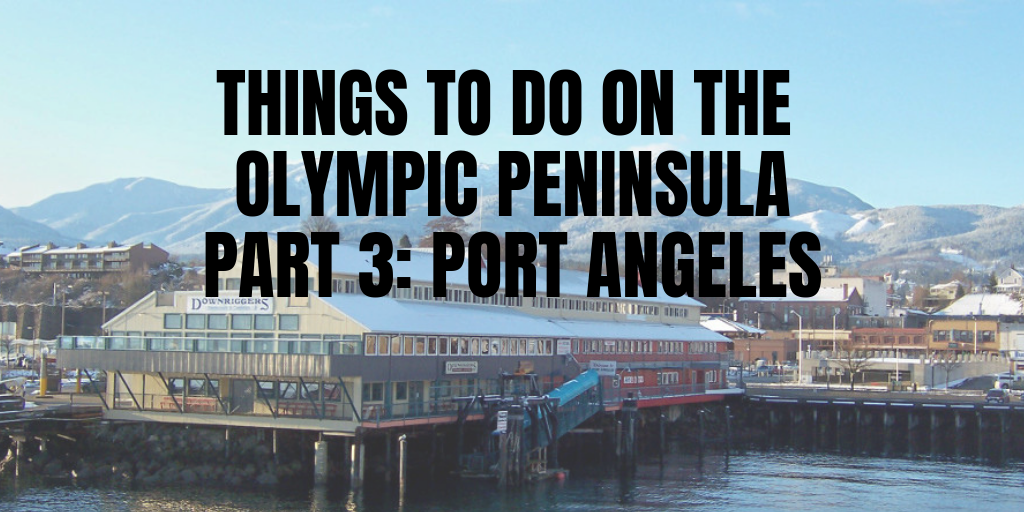
Port Angeles is located 30 minutes west of Sequim and is home to the jewel of the Olympic Peninsula, the Olympic Peninsula National Park.
Port Angeles is a working-class town that traditionally relied on timber and fishing. It is also the county seat. You can easily find whatever services you need here. This is also the best home base for exploring the Olympic National Park.
For groceries or a snack, be sure to stop by Country Aire Natural Foods downtown. This is a large-scale health food store with a seafood counter, espresso bar and deli, and extensive produce section. They also have several prepared foods that are perfect for a quick supper or picnic. If you are in Port Angeles on a Saturday morning, stop by the Port Angeles Farmers Market downtown for a freshly made pastry from Pane D’Amore bakery or buy some seasonal vegetables from Johnston Farms. You can also find flowers, smoked salmon, arts and crafts, and a variety of produce, depending on the season.
If you need hiking or back country gear, be sure to stop by Brown’s Outdoor. They’ll have what you need. If you need camping equipment or other types of gear, check out Swain’s General Store on First Street, just east of downtown. Swain’s has everything, not just what you need, but also what you didn’t know you needed.
One of the great luxuries of a National Park vacation is the chance to unwind, sit for a spell, and enjoy a good book. Fortunately, Port Angeles has a truly exceptional independent bookstore. Be sure to stop by Port Book and News on First Street, right next door to the fountain. We love this place! They have an extensive collection of magazines, as well as new and used books, local books, maps, and guides, and games, cards, and gifts. Truly independent, local bookstores are a dying breed, please be sure to stop at Port Book and News and check it out.
The Olympic National Park headquarters are located on Race Street, just south of downtown. At the Visitors’ Center, can pick up maps, guide books, back country passes, and get more information about the Park. If you travel 17 miles south of the Visitors’ Center, you will arrive at Hurricane Ridge, which is at 1 mile elevation. There are several scenic overlooks along the way that are worth the stop. From them, and at the top, you can see the Sequim Valley, Port Angeles, the Strait of Juan de Fuca, the San Juan Islands, Mount Baker, Victoria, and beyond. On a clear day, you may even see Seattle. The Visitors’ Center at the top of Hurricane Ridge has a short movie, maps, information, and guided ranger hikes, as well as bathrooms, a gift shop, and a small coffee shop. There are numerous trails of varying lengths and degrees of difficulty that leave from the top of Hurricane Ridge.
Hurricane Ridge is especially magical in the winter. The road is only open on select weekends and always depends on the weather conditions. Be sure to check the Park’s Twitter feed for current weather conditions and be sure to arrive early because the parking lot usually fills up in the first hour or two and access to the mountain is discontinued until a sufficient number of cars have departed. You will also need to have tire chains in your car. You will very likely need to put them on your car at the beginning of the winter season before the road has frozen and hardened. At the top of the mountain, you can downhill ski, snowboard, cross country ski, tube, and snowshoe. The Visitors’ Center rents snowshoes and poles, as well as some ski equipment. We especially enjoy snowshoeing it is beautiful and is a great workout if you go any distance and/or climb up some steep peaks. If you’ve never snowshoed, sign up for a free ranger-led snowshoe hike. The Park is stunning in the winter with evergreens loaded down with snow and bright, blue clear skies. There are few places on the Ridge where you can stand in the snow and see the Strait of Juan de Fuca and downtown Victoria, BC in the distance. It is just stunning.
If you have the time, I recommend traveling west from Port Angeles out to La Push on the Pacific Ocean. It will take you about 1.5 hours to get there. Once there, you can walk along the beach or camp overnight. If you don’t have that much time, consider a visit to Lake Crescent, which is just 30-45 minutes west of Port Angeles.
Lake Crescent is a beautiful, deep alpine lake where heavily wooded foothills plunge into the crystal clear, cold waters of the lake. US Highway 101 hugs the southern shore of the lake. A short, primitive road goes along the east shore and a small section of the west and north shore, but there is no road around the lake. A visit to the Lake Crescent Lodge is a must. Check the website to make sure it is open, it generally closes in the winter, after New Year’s. You can stay or dine at the Lodge. You can also swim, rent boats, and picnic. In addition, the Marymere Falls trail starts at the Lodge. This is an easy, but highly rewarding, hike to a stunning waterfall. It will take you about 45 minutes to get to the waterfall. There are several trails the split off this one. If you have the time, I recommend driving along East Beach Road and parking at the Spruce Railroad Trail trailhead on the opposite side of the lake. From here, you can walk or mountain bike to the Devil’s Punchbowl bridge. There is also a bike trail on this side of the lake that is partly paved. Be sure to check the website for the latest updates on construction of this trail.