NOTICE
Although our practice continues, we are no longer accepting new clients.

Law Day: A Lawyer’s Holiday!

Posted on Tuesday, November 1st, 2016 at 4:11 pm    

Law Day: A Lawyer’s Holiday[1. This article originally appeared in the May 2007 issue of Trial New, a publication of the Washington State Association for Justice (formerly the Washington State Trial Lawyers Association).]

I have always enjoyed Law Day. I always think of it as “our” little holiday. I always feel especially proud to be a lawyer on May 1st and look forward to the various Law Day celebrations and activities, especially WSTLA’s annual Law Day dinner. However, as I approached this Law Day, I realized that I didn’t know much about the origins and history of Law Day and decided to do some research to find out more about it.

Law Day was originated in 1957 in response to American Bar Association president, Charles Ryne’s vision of a special day to celebrate our legal system. A year later, President Dwight D. Eisenhower signed a proclamation establishing the annual event. In 2000 at a Law Day speech at the Law Library of Congress, Ryne described the origins of Law Day, as follows:

The immediate inspiration for a May 1 celebration of law was directly related to the Cold War. For many years the American news media gave front page headlines and pictures to the Soviet Union’s May Day parade of new war weapons. I was distressed that so much attention was given to war-making rather than peace-keeping.

My idea was to contrast the United States’ reliance on the rule of law with the Soviet Union’s rule by force. To that end, I drafted a U.S. Presidential Proclamation, which made its way from John Foster Dulles, Secretary of State, to Sherman Adams, Chief of Staff to President Eisenhower, and stopped there.

It had seemed such a sure thing that Dulles had affixed his signature, authenticating the President’s signature, before the Proclamation was presented to Eisenhower. Dulles then left on a trip. Because Dulles was so respected, not only by Eisenhower but by the world, I wanted his signature on the Proclamation rather than some assistant’s.

Time passed. May 1 was fast approaching and I had heard nothing, so I went to see Governor Adams. He pulled the Proclamation out of his desk and gave it back to me saying “the President will not sign a proclamation praising lawyers.”

I strode down to the Oval Office and handed it to President Eisenhower himself. As he stood there reading it, Adams burst in yelling “Do not sign that paper praising lawyers!”

The President held his hand up for silence until he had read the entire document. Then he said “Sherm, this Proclamation does not contain one word praising lawyers. It praises our constitutional system of government, our great heritage under the rule of law, and asks our people to stand up and praise what they have created. I like it and I am going to sign it.” And he did.

It has always seemed to me that Governor Adams thought I was urging, not recognition of Law Day, but recognition of a Lawyers Day, sort of like Mothers Day or Fathers Day. I am glad that President Eisenhower set him straight.[1. www.abanet.org/publiced/lawday/2007/history/rhyne2000.shtml]

Beginning May 1, 1958, the media, bar associations and citizens throughout the country began celebrating the rule of law in the United States. Every year, lawyers speak in schools, sponsor essay contests and host banquets, not to focus attention on lawyers, but to strengthen awareness of “the great heritage of liberty, justice and equality under law which our forefathers bequeathed to us.”[2. www.abanet.org/publiced/lawday/2007/history/1stproclamation.shtml]

In later years, Law Day observances spread throughout the world.

Although the American Bar Association continues to take the leading national role in promoting Law Day,[3. See the American Bar Association’s Law Day web pages for more information on ABA sponsored celebrations and Law Day history at www.abanet.org/publiced/lawday/2007/home.shtml.] WSTLA has taken the lead in Washington state for decades. Like the ABA, WSTLA’s celebration focuses not on lawyers, but on judges, citizens and journalists who preserve the civil justice system and protect the public.


Yoga Basics

Posted on Sunday, October 30th, 2016 at 7:30 pm    

Are you interested in trying yoga?  Confused about the types?  Don’t know how to start?  Most studios have introductory courses for new students and many have free sessions to help you see if you are interested in learning more.  The following is a basic description of the different types of yoga.

Yoga originated in ancient India namely as a meditative and spiritual practice. It’s prominence in the western world grew in the 1980s and now it’s as trendy as ever, with benefits including mental clarity, flexibility, posture, and muscle tone, among many more. Some of the most common forms you’ll find at yoga studios throughout the city include Vinyāsa, Restorative, Hatha, and Bikram.

Vinyāsa

Vinyāsa yoga is a flowing blend of poses and postures that are continuously moving. They correspond with breathing exercises and do not follow a choreographed sequence. The instructors adapt them to a central goal they determine for the class, often inspired by a quote or an intention.

Restorative

Restorative yoga is self-explained. It deals with a limited number of poses, but rather than flowing through them like in Vinyāsa, each pose is held for longer with the goal to reduce stress levels and stimulate the nervous system. It’s a beautiful counterbalance to a busy life, as its results often include physical and mental feelings of renewal and rest.

Hatha

Hatha is a combination of poses, breathing, and meditation. Postures are held for longer and reached at a slower pace. Each instructor has a different take on this practice.

Bikram

Bikram yoga is a set. The poses are always exactly the same in the same format and it lasts 90 minutes (some studios offer a couple 60 minute sessions). 26 postures are are held in rooms heated to 105ºF, with 40% humidity. All Bikram yoga teachers are certified to teach that specific form.

Read more here.

Click here for map of Seattle yoga studios.


Halloween Safety Tips

Posted on Friday, October 28th, 2016 at 10:00 am    

the_pumpkin_line-upHalloween can be a great holiday full of celebration and fun, but there are lots of safety hazards that can come into play. Have a look at the following tips to ensure you have the safest Halloween possible.

IF YOUR KIDS ARE GOING TRICK OR TREATING, MAKE SURE THAT:

  • They have trusted adult supervision or if older, use a buddy
  • They are using a flashlight in dark areas
  • Their costume stands out in the dark (you can use reflective tape or bright colors)
  • They know how to recognize an emergency and when to call 911
  • You’ve included a contact number on their costume or wrist in case they wander off
  • No toxic ingredients are in their face paint
  • The candy they bring home is sealed and tamper-free
  • They only trick or treat to houses with the lights on
  • They are using crosswalks and being safe near roads
  • They are trick or treating in neighborhoods they trust

IF YOU’RE READY TO GREET TRICK OR TREATERS OR ARE HOSTING A PARTY:

  • Make sure there are no obstacles that can cause visitors to trip
  • Keep your paths raked and well lit
  • For the love of your furry friend, put your confused pet somewhere they feel comfortable
  • Don’t give trick or treaters homemade goods
  • Using battery-powered candles in your pumpkins reduce the chance of fire

Jeff Boyd: How Being an Athlete Makes Him a Better Lawyer

Posted on Wednesday, October 26th, 2016 at 10:00 am    

1. How many racing events have you participated in and which kind?

I’m a biker!  I have participated in a number of organized rides and races in Washington, Oregon, British Columbia, and California.

2. How long have you been participating in these events?019first-bike-birthday-7-yrs

I’ve ridden since I got my first bike. I rode every day when I had a paper route in Junior High. I rode casually in college and after that, but didn’t get serious until I moved to the Northwest in 2009.

3. Are they more of a hobby or a competition to you?

They are a means of keeping healthy and reducing stress.

4. What are your training methods?

Never get out of shape.  Although I have to cut back when the weather is bad, I don’t ever let my baseline fall too far.  In season, I just push it – there is no substitute for long rides to get ready for long rides.

5. How do you find time to train with such a busy career?

You have to make it a priority.

6. How does the sport benefit your physical and mental health?

The great thing about long rides (up to 100 miles or more) is that they are long.  They push you to a high state of exercise for 6 or 8 hours at a time, without causing the damage that you would get running for that length of time.  Races are shorter, but more intense.  Both clear the mind!

7. How does that contribute to your effectiveness as a lawyer?

Staying is physical shape helps me be more productive at work, so I think of riding as an investment in my career.  I clear my head, and get great ideas for cases on long rides. The mind works better when the blood is pumping (and not distracted by phone calls and emails).

Keep Reading: Can you be a Serious Lawyer and a Serious Athlete?
Serious Lawyer Tri photo

Tips for Cycling Safely In Bad Weather

Posted on Friday, October 21st, 2016 at 10:00 am    

Cycling in Rain Header

Although Summer is the most glorious time for cycling, it is still possible to have some fun rides during the Fall, as long as you take these extra safety precautions:

  1. Wear Reflective Gear

Shorter days mean darker days.  Make sure that cars can see you by wearing reflective gear while cycling, regardless of the time of day.

  1. Wear Cold Weather Gear

You will nearly always be colder on a bicycle than if you are walking.  When you ride, you create a breeze that cools you, even though you are exercising.  Be sure to wear socks and gloves to keep your extremities warm.  If you are wearing something extra on your head, make sure it doesn’t block your vision or hearing.

  1. Ride Safely in the Rain

Watch out for slick spots while riding in the rain.  Manhole covers, grates, leaves, and other shiny or slick objects can cause you to crash.  Also stay off the reflective tape on the road!  Don’t ride on the “fog line” because it gets really slick when it is wet.

  1. Watch Out For Puddles

Don’t ride through puddles.  You never know how deep they are or what is at the bottom.  Puddles often form in cracked road surfaces, which are especially dangerous for cyclists.

  1. Use a “Buddy Flap” or Fenders

Keep yourself dryer and be kind to your friends by putting fenders or a “buddy flap” on your bike during bad weather, BUT make sure you install them properly so that they don’t come loose and stick in your wheels.


Where To Look for Fitness Deals

Posted on Tuesday, October 18th, 2016 at 10:00 am    

Are you looking for an affordable way to stay active in the city, despite the high cost of living? It may sound like an impossible goal but there are ways to combat the high prices while still getting involved.


  1. GROUPONgroupon

If you’ve never used Groupon before, you’re missing out! It is a wonderful resource to find deals of all kinds from cooking classes, to tourist attractions, to even spa treatments and electronics. I regularly browse through the new postings in search of great deals. My most common purchase? Fitness classes! Yoga, kickboxing, zumba, you name it! You’re likely to find excellent prices to participate.

Keep in mind, though, that these deals are often for NEW users only, AND they may expire. The good news is that there are a lot of different fitness venues around town so you can keep trying new ones with the discounts you’ve purchased until you find one you’re happy paying full price for!


  1. NEW MEMBER SPECIALS

special-offerMost fitness places throughout the city offer specials for new members. Core Power Yoga, for instance, offers one week FREE for new students. Urban Yoga Spa allows current students bring a guest for FREE. Evolv Fitness of Seattle offers new students their first class for FREE. Orange Theory Fitness also offers a free workout. So there are plenty of places where even folks on a tight budget can get their foot in the door and try out a new place.


  1. YOUR LIVING ROOM

youtubeThere are some GREAT youtubers offering comprehensive workouts in a variety of styles. You can dance, crunch, and stretch your way healthy right in your living room for FREE. The downside? You’re in charge of motivating yourself! No instructors or other students around pushing you to excel throughout your workout. The Fitness Marshall and Blogilates are a start.


  1. ONLINE

meetupHave you ever heard of Meetup? It’s an online forum where you have the opportunity to choose your interests and find others in your area that are into the same things. You can discover friends that also like to run, rock climb, or row. Organizers host Meetups for you to get involved in the activities you enjoy.

  1. IN THE COMMUNITY

Believe it or not, your community wants you healthy! In the summer, the Seattle Center hosts FREE zumba and yoga classes once a week. So nice of them right? Check your local community center for free or reduced rate fitness specials.


10 Tips to Staying Healthy on the Road

Posted on Wednesday, September 21st, 2016 at 10:00 am    

_MG_2434

Many of us commit to eating better, exercising more often, and eliminating unhealthy habits.  But those best laid plans often get jettisoned during vacations or business travel.  Whether it is long travel days, early client meetings, or late depositions that have you on the road, it is often difficult to stay on track and keep your health in balance when you are away from home.  Here are some tips I use to keep myself on track, despite frequent travel:

  1. Plan ahead.

    Leave as little to chance as possible.  Check your flight schedule to see when you will be departing and arriving.  Take a look at the hotel website to see what sort of dining and fitness options are available.  Review your schedule to see when you will be in meetings or otherwise committed and when you can take time to eat and sleep.  Make a specific plan for your trip including when and where you will exercise, when you will sleep, and what you will eat.

  1. Bring your own food.

    I ALWAYS take food with me when I travel.  Sometimes I just take the bare essentials, other times I actually take fresh produce with me.  It depends on my schedule and where I’m going.  My favorite items to pack are packets of protein powder shakes, cans of tuna with pull top lids, smoked oysters, protein bars, almonds, and cinnamon (to sprinkle on yogurt and oatmeal).  If I’m going places where the food options will be limited, I might take along fresh produce like radishes, carrots, broccoli, mandarin oranges, or a grapefruit.

  1. Bring your own tools.

    I always travel with a large shaker bottle so I can mix my protein shakes. In addition, I pack a small cutting board, a small paring knife with a cover on it (be sure to pack that in your checked luggage!), plastic spoons and forks, and sometimes some measuring cups.  These things don’t take up much room and can transform your hotel room into a functional kitchen.

  1. Locate nearby grocery stores.

    Before you leave home, find a grocery store at your destination – and go there as soon as possible after you arrive!  I prefer grocery stores that have salad bars.  I treat myself to a nice, healthy salad before I grocery shop for my trip.  Be sure you have a shopping list so that you don’t succumb to the temptation to buy unhealthy food.  I like to stock up on fresh veggies, fruit, unsalted nuts, Greek yogurt, and low fat salad dressing.  If you don’t have a refrigerator, you can still buy most of these things and have healthy snacks to supplement your meals.

  1. Look up menus online.

    If you will be dining out at your destination, take a look at local restaurants online.  If possible, try to be the one in your group who selects the restaurants where you will be dining.  Look at the menus to see what sort of healthy options are available.  Some online reviews of restaurants are written by people with dietary challenges who will comment on how well the restaurant handled their requests.  I prefer seafood restaurants because I can nearly always get lean protein and vegetables.  High end steak houses are also good places to get a big prawn cocktail and a nice salad.  Avoid the bread basket and dessert tray.  Ask the server to put your salad dressing and sauces on the side and not add any salt to your meal (restaurant meals are notoriously high in sodium and fat).  Ask for lemon wedges on the side to squeeze on your salad and seafood.

  1. Scout out fitness options.

    Before you leave home, check out the hotel website to see what sort of fitness opportunities are available at your hotel.  Check to see if there is a park or running trail nearby.  Look at local fitness clubs or the local community center or YWCA.  They often have very affordable day rates and wonderful facilities.  I started running because it is easier to just throw my running shoes in my suitcase than to rent a bike.  Sometimes, I even check to see if there is a 5k or 10k that I can do at my destination.  Seeing a different city while running is sometimes the best way to get acclimated and see something new.

  1. Get a good night’s sleep.

    Getting a good night’s sleep while traveling is often a challenge.  As much as possible, stay on your regular schedule so that you aren’t sleeping at odd times.  If you need an eye mask or a white noise generator to sleep at home, pack those items so you will have what you need.  Avoid the temptation to stay up late or rise too early.  If you have to make a choice between working out and sleeping, sleep.

  1. Remember to hydrate.

    Traveling is hard on the body.  Flying, hot climates, high altitudes, soft drinks, and many other things can dehydrate you.  To be on the safe side, drink extra water a day or two before you leave home.  While you are gone, try to avoid dehydrating things and increase your water intake.

  1. Watch your salt intake.

    There is more salt in your food than you realize.  When I travel, especially when I fly, I crave salt.  There is something about being in an airport that just makes me want to eat.  As a result, I have to take extra steps to avoid weight gain due to increased sodium intake.  I try to drink more water and eat more crunchy foods (raw veggies, etc.) because that helps cure the salt craving for me.  In addition, I always ask restaurants not to add salt to my food.  Once you start reducing your sodium intake, you really won’t miss it.

  1. Keep moving.

    Find ways to stretch, walk or otherwise keep in motion.  On the plane, get up and walk the aisle at least once every hour.  Walk more than you have to at the airport.  Take the stairs at the hotel rather than the escalator.  Don’t just sit.  Recent studies have shown that even small movements can significantly increase well being.  The chair is your enemy!

Traveling, whether for business or pleasure, is one of the great joys of life.  You have a chance to experience life in a different way and enjoy a change of scenery, food, climate, customs, and people.  Being fit and healthy enough to enjoy traveling is a gift you give yourself.  Returning home without a nasty surprise when you step on a scale is a bonus.  The more you travel, the more important it is to stay healthy on the road.  Safe Travels!


What You Need to Know About Motorcycle Insurance

Posted on Saturday, September 10th, 2016 at 10:47 pm    

“I Have Insurance”

The fact that you have “some” insurance doesn’t really mean anything.

A lot of people don’t understand what insurance coverage they have, let alone what  insurance coverage they should have, until it’s too late. Many insurance agents are  unfamiliar with the special needs of bike owners, and some are too interested in getting your business by “saving you money” than by selling you a good policy.

Most people feel pretty comfortable with their insurance. That is because most people have never had a significant claim. Your agent may be your friend – but your agent has nothing to do with your claim should you have a wreck.

Insurance companies are split into two personalities: the “money in” part (your agent) and the “money out” part (the claims adjusting group). If you have anything other than a very minor claim, you will quickly find out that the “money in” door is a lot bigger and a lot friendlier than the “money out” door. The minute you have a substantial claim, most insurance companies treat you with all the respect they would treat an “outside” person who is making a claim: as a stranger, not as a trusted customer.

What you don’t know will hurt you. I write this from the perspective of a lawyer that has represented many, many riders who have been in wrecks only to find out that their “full coverage” policy doesn’t begin to do what they need it to do. I have no financial interest in this advice – I’m not trying to sell you insurance. I am giving you real-world information to protect you against the ruin that will come to you if you are in a wreck and don’t have the kinds of insurance coverage and the amounts of insurance coverage that you need.

Kinds of Motorcycle Insurance Coverage

A typical insurance policy consists of the basic insurance agreement, plus amendments (changes that are usually specific to a state), plus endorsements (changes that are special to your policy). Amendments and endorsements may either add to the basic coverage or subtract from it.

The typical coverages that are available are:

  1. Bodily Injury Liability
  2. Property Damage Liability
  3. Uninsured/Underinsured Motorist Bodily Injury
  4. Uninsured/Underinsured Motorist Property Damage
  5. Personal Injury Protection
  6. Collision
  7. Comprehensive 
  8. Towing & Storage

So what is all this stuff??? The first thing you need to know is that there is no such thing as a standardized “full coverage” policy. There is such a thing as a “state minimum” policy, but it is about as worthless as training wheels on a rocket. Insurance policies are like tattoos – no two are alike. So let’s look at what kind of coverages there are, and what amounts of coverage you need.

We’ll work from the perspective of three typical wrecks.

Wreck A is nobody’s fault. You are coming home from Bike Night somewhere when a damn deer jumps out in front of you. You lay it down, skin up your bike, and break your leg (never mind what happens to the deer).

Wreck B is your fault. You are enjoying a beautiful day, and you fail to yield when you should have. You plow into the side of a minivan full of mom and dad and three kids. You aren’t hurt, but your new bike is toast. Unfortunately, the real problem is that the minivan has a big dent in the side and everyone in it is yelling “whiplash.” The next day, you get a letter from a lawyer you’ve seen on TV who says he’s going to sue you.

Wreck C is the monster. You are riding along minding your own business and some fool on his cell phone in an SUV “doesn’t see you.” As he changes lanes, he grinds you into the guard rail. The bike you just spent six months customizing is a mess, and you are hurt bad enough that you have to be taken by helicopter to the nearest trauma center. There you undergo four hours of surgery, four days in intensive care, a second surgery, six more days in the step-down unit, and go home to several months of physical therapy and rehab – all while you are off work. You’re going to have scars and a limp for the rest of your life. But best of all, the SUV driver “forgot” to make his insurance payment, so his insurance was cancelled, and his personal net worth is whatever cash he has in his wallet that day.

Let’s start with what the State of Washington requires you to have. If you want to “be legal,” you only need to have coverages in the amount of:

  • $25,000 for bodily injury or death of one person in any one accident;
  • $50,000 for bodily injury or death of any two persons in any one accident;
  • $10,000 for injury to or destruction of property of others in any one accident.

That’s all. Beyond that, if you have a loan on your bike, the almighty bank will probably require that you have enough Collision Coverage to pay off the loan if the bike is totaled. All the rest is up to you.

Now let’s look at Wreck A. With the “state minimum” policy + standard Collision Coverage, the only thing that will apply is the Collision Coverage. Hope you have health insurance! Hope it pays in the event of an accident! If your bike is damaged, but not totaled, be prepared to be without it for a long time; worse, if it is “totaled,” I hope your idea of what the bike’s “fair market value” is matches the insurance company’s idea of the FMV (more about this below).

Wreck B: With the “state minimum” policy + standard Collision Coverage, you have all the problems of Wreck A, but now you have a couple of nasty new problems. Your Liability Coverage now kicks in. BUT – the estimate to fix the minivan is $13,000, plus the cost of the rental car while the mini is in the shop – another $1,000. The estimate to “fix” the personal injury claims of the five people in the van is $18,000 each. Since you have Property Damage Liability limits of only $10,000, you get a bill for the extra $4,000 on the van. Ouch. But you have Bodily Injury Liability Coverage, right? Yes, but – you only have $25,000/$50,000 limits. Here, that means that any one person in the van can get a maximum of $25,000. So you’re good, right? No. Because five times $18,000 equals $90,000. So you get a bill for $90,000 minus your maximum limits of $50,000. You are personally on the hook for $40,000 (plus the $4,000 for the property damage). Know a good bankruptcy lawyer???

Wreck C: Here, with the “state minimum” policy + standard Collision Coverage, you are really, really screwed. Your bike loan will get paid off, maybe, but that won’t matter because you are on the one-way road to bankruptcy, whether you know a lawyer or not. That cellphone-talkin’ idiot has just cost you anywhere from $100,000+ in medical bills and $15,000+ in lost wages – and NO ONE is going to pay you ANYTHING.

You say “that can’t be right!” But the fact is, the idiot will never pay you a dime, because he will just go file bankruptcy himself! And with a “state minimum” policy you don’t have ANY coverage that helps you! If you don’t have health insurance, YOU are going to get a bill for that $100,000+, and if you do have health insurance, your deductibles and co-pays may leave you with balances you can’t begin to pay. Yes, you may lose your home and your car and everything else because you couldn’t make the payments while you had no income. No, there is no magic “fund” out there to pick up the slack. And all the money and time you put into making your bike beautiful is just g-o-n-e.

Now, really, did your friendly insurance agent explain all that to you while he was trying to save you 15% in 15 minutes?

So what are all these kinds of coverage?

What DO you need so that you are protected from the nightmares? First, you need to really understand those eight kinds of coverage I listed above.

1. Bodily Injury Liability Coverage
Liability Coverage is for the damage you do to the other guy. When you run a stop sign and smash into somebody, your Liability Coverage steps in to take care of your legal responsibility to that other person. In a bodily injury claim (also known as personal injury claim), that is coverage for the other person’s medical bills, lost wages, and what is generally called “pain and suffering”. Also – and few people know this – your Liability Coverage pays for a lawyer to defend you if you get sued.

2. Property Damage Liability Coverage
This is Liability Coverage for the damage you do to the other guy’s vehicle or its contents, and for their “loss of use” claim (think “rental car”).

3. Uninsured/Underinsured Motorist Bodily Injury Coverage
If I can tell you one thing it is that you MUST understand the difference between Liability Coverage and Uninsured/Underinsured Motorists Coverage!

These types of coverage, also known as “UM” or “UIM” Coverage, are insurance for YOUR benefit. When some fool falls asleep at the wheel and drills you, and when that fool does not have any insurance (he is “uninsured”) or does not have enough insurance (he is “underinsured”) your UM/UIM Coverage will pay you for what his insurance would have paid you if he had insurance. Let me repeat that – if someone causes a wreck and doesn’t have any, or enough, insurance, your UM/UIM Coverage will pay what the other person should have paid, up to the limits of your  coverage.

This is a big deal. Although Washington law says you have to have insurance to drive, a LOT of people don’t have any insurance, and a LOT MORE don’t have very much insurance. But a lot of people scrimp on their UM/UIM Coverage to save money. DON’T! Uninsured/Underinsured Motorist Bodily Injury Coverage is for your medical bills, your lost wages, and your pain and suffering.

4. Uninsured/Underinsured Motorist Property Damage Coverage

Uninsured/Underinsured Motorist Property Damage is for the damage the fool did to your vehicle or its contents, and for your “loss of use” claim (think “rental car”). With this coverage, the deductible is limited by law to $250. This coverage can apply instead of Collision Coverage or in addition to it.

5. Personal Injury Protection (PIP) Coverage
Very few people understand what Personal Injury Protection is all about – and that’s a shame, because it is like liquid gold. This coverage pays for medical bills, funeral and burial bills, income continuation, and loss of services incurred because of an accident. PIP is a no-fault type of coverage. It does not matter how you got hurt – the other guy’s fault, your fault, no one’s fault.
Insurers providing automobile insurance policies must offer minimum personal injury protection coverage for each insured with benefit limits as follows:

  1. Medical and hospital benefits of ten thousand dollars;
  2. A funeral expense benefit of two thousand dollars;
  3. Income continuation benefits of ten thousand dollars, subject to a limit of two hundred dollars per week; and
  4. Loss of services benefits of five thousand dollars, subject to a limit of two hundred dollars per week.

You want this coverage! Your health insurance may pay some of bills from an accident, but
you may not have health insurance, or it may not pay for some types of treatment that you
need, or there may be deductibles and co-pays. The other guy’s insurance may pay the bills
in the long run, but usually not until the end of the case – which may be too late to save you
from bill collectors. If no one is at fault, PIP may be the only coverage under your policy that
pays anything. Trust me – PIP is one of the best, and relatively cheapest, coverages you
can have. Get it.

6. Collision Coverage
Collision Coverage kicks in when you wreck (“the upset or collision with another object of your covered cycle”). This coverage is no-fault, and covers the damage from almost any collision regardless of the reason (well. . . there are some exceptions written into every policy). BUT, what does “cover” mean? If you think it means you get paid what you think your bike is worth, you are dead wrong.

First, the difference between a wreck where your bike is “totaled” and where it is repairable: “Totaled” means the cost of fixing the bike is higher than the “value” of the bike. No matter how much you love your ‘ol Hardtail, if it would cost $12,000 to fix it, and it is only “worth” $8,000, it is going to the dump. Also, insurance only pays for your bike. Insurance companies have no responsibility to replace your bike.

What does “value” mean? It means “ACV” or Actual Cash Value (also known as “FMV” or Fair Market Value). ACV is the amount that someone would pay for your bike if you put it for sale in the paper or on e-Bay. Put on your “buyers” hat, and think what a stranger would pay for your baby. Odds are, it’s not what you think it is worth – but you may be stuck with the “stranger’s” value.

Since very few riders keep their motorcycle in its original condition, this “value” issue is often a big problem as to custom work, too – and one you may not even know about until it’s too late. The value of your bike is not cost plus the amount of money or effort you have invested. Putting $25,000.00 worth of paint and chrome on a $5,000.00 bike does not necessarily mean the end result is worth $30,000.00. It is a rare modification that results in a dollar-for-dollar return in the value. It does not matter how much you “have in it”, if someone walking up to the bike would not pay you as much as you “have in it”.

Most of the time, loss or damage to any custom equipment or paint/chrome, optional equipment, or added equipment not included as standard by the manufacturer is not covered (or is covered only up to a very low amount, say, $500) unless there is a specific endorsement to the policy.

Talk to your agent about this! Get the coverage you want and expect! There are special coverages or special policies available that will cover a bike and its accessories based upon an agreed value, or a value from an appraisal done before you wreck. This kind of coverage is not what you get in standard policies. If you haven’t dealt with this when you get your policy you may be in for a nasty fight after a wreck. These claims are very tough to fight in court, as a practical matter, because of the dollars involved and slow court calendars.

7. Comprehensive Coverage
Comprehensive Coverage takes care of damage to your bike from accidental losses other than those caused by a collision (fire, theft, etc.). However, “comprehensive” does not mean “everything.” There are often exclusions for many things, such as your clothes, your tools, or custom items. Helmets are often covered (although some policies are limited to a “Department of Transportation approved helmet”). Insurance companies, at least, believe it is in your best interest to wear a helmet and will “reward” you for wearing one.

8. Towing & Storage Coverage
You had to put it down. What now? You can’t just leave it by the side of the road. And after someone charges you to tow it somewhere, storage charges can be $20/day or more. These charges usually are not covered in your Collision Coverage or Comprehensive Coverage. Cover these risks by getting insurance for them.

How Much Coverage is Enough?

Remember – there is no such thing as a “full coverage” policy. The most anyone can ever be covered for by their policy is defined by the “limits” of the coverage. This works both ways. For Liability Coverage – you will only be protected against claims by others up to your liability limit. The rest of the “bill” comes out of your pocket – or your hide. For Uninsured or Underinsured Motorists Coverage – no matter how bad you are hurt, or what your case is worth, you will never get more than your UM/UIM Coverage limits.

How much is enough? For Liability Coverage, it is true that part of the answer to that question depends on how much you have to lose. But if you like your bike, your house, your paycheck and your driver’s license, you better insure against losing them. Typically, motorcycles do not do as much damage to the other guy as cars do. But if you put your bike through the door of a car at 60 miles an hour it does not take much for the people in the car to run up a small fortune in medical bills and lost wages, let alone their pain and suffering claim.

For Uninsured or Underinsured Motorists Coverage – remember – this is coverage for what happens to you. Do you want to sell your claim short? I can’t begin to tell you how many “million dollar” cases I’ve handled where the person only got a fraction of that, because that’s all the insurance there was. There is no “magic fund” out there to take care of you – you have to take care of yourself by having adequate coverage.

For Personal Injury Protection Coverage – This does depend somewhat on your health insurance picture. If you have great health insurance, you don’t need as much PIP. But what if you lose your job? What if your company “downsizes” your health insurance? PIP is cheap, and it is a life saver when you need it.

So how much insurance should you have?

In my opinion, you should not be on the road unless you have these minimums:

1. Bodily Injury Liability Coverage
$100,000/$300,000. This means One Hundred Thousand dollars for each person who is injured, up to a total of Three Hundred Thousand dollars for everyone hurt in one wreck. This may seem like a lot, but as I said, modern medical treatment is expensive – medical bills and lost wage claims alone can add up faster than you can imagine.

2. Property Damage Liability Coverage
The state minimum is $10,500. Are there any cars or bikes out there on the road worth more than that? Absolutely! Think about how many new cars cost more than $25,000 these days, and you will see that you need at least that much in Property Damage Liability Coverage, and you ought to have more to be really safe.

3. Uninsured/Underinsured Motorist Bodily Injury Coverage
Think back to “Wreck #3.” How much would you want to be paid for that experience? That’s how much UM/UIM Coverage you should have. The law says that your UM/UIM can’t be higher than your Bodily Injury Liability limits, so high UM/UIM limits aren’t cheap. But, again, $100,000/$300,000 should be the smallest policy you consider.

4. Uninsured/Underinsured Motorist Property Damage Coverage
What’s your bike worth? Uninsured/Underinsured Motorist Property Damage is not as important if you have Collision Coverage, but there may be some price advantages to having this – ask your agent.

5. Personal Injury Protection (PIP) Coverage
Don’t even leave your house without $50,000 in PIP. Unless you have great health insurance. Or unless you like paying medical bills out of your own pocket.

6. Collision Coverage
You need to cover the real value of your bike, cover the value of your modifications, cover the value of your accessories, and cover the value of your loan. Why end up “in the hole” when an accident happens? Unfortunately, there is a pretty good chance that at some point in your riding career you’ll need this coverage. Be sure you understand what you have before you need it. And don’t try to save a buck by having a high deductible. Do you really want to have to come up with the first $1,000 or more after a wreck? Odds are you’ll have plenty of other needs for that money.

 7. Comprehensive Coverage
Ditto Collision Coverage.

8. Towing/Storage Coverage
This coverage isn’t that expensive, and it covers bills that are really annoying to have to pay out of your pocket. Get at least $100 or so for towing, and 30 days worth of storage.

The Policy You Ought to Have

If that’s the minimum, what’s a really solid policy look like? It looks like the above, but with these changes:

  • Bodily Injury Liability Coverage and Uninsured/Underinsured Motorist Bodily Injury Coverage: $250,000/$500,000, with a $1 or $2 million “umbrella” on both types of coverage (see below);
  • Property Damage Liability Coverage of $50,000, and;
  • Personal Injury Protection of $100,000.00.

Yeah, the ideal policy is going to cost you some money. But it won’t cost you anything like what a wreck will cost you if you don’t have enough insurance. At the next “bike night” look around. See anyone who has been in a wreck? It happens – and it happens to bikers way more often than it should. Protect yourself. The last thing you need as you are recovering from a wreck is the worry of bill collectors, lawyers, and bankruptcy.

“Umbrella” coverage gives you a lot of extra coverage for not that much more money – talk to your agent about it! You usually have to have pretty high limits on the underlying policy, but it is worth it when you need it.

There are a lot of good insurance companies and good insurance agents out there. Some know bikes and some don’t. Several companies are going out of their way to attract bike owners as customers. Talk to several agents. See if they know what you are talking about when it comes to the special needs of bike owners and riders. But most of all – protect yourself. You don’t know despair until you have been laying in a hospital bed because some idiot ran over your bike and you get a letter telling you that they didn’t have any insurance and/or they just filed bankruptcy. Or until you get sued for way more money than you have coverage for. If you don’t take care of yourself, no one else will take care of you. Ride to live and live to ride – without the worries of what will happen if you have a bad day.

Download Nelson Boyd Law’s “What You Need to Know About Motorcyle Insurance” Article as a PDF


Would You Drive Blindfolded?

Posted on Saturday, September 10th, 2016 at 10:17 am    

Another cyclist died. Killed by a car. This cyclist was a brilliant 25-year-old teacher who led a group of cyclists on a cross-country trip to raise money for affordable housing projects. It happened on a Thursday morning in Oklahoma. The driver apparently reported to police that she had been looking down at her cell phone when she struck two cyclists, killing one.

Two years ago, on a Tuesday in Arkansas, a recent high school graduate was killed while she rode her bike across the U.S. The driver, who plowed into a group of cyclists, hit them because he was distracted while driving.

These are just two stories. There are many, many, many more.

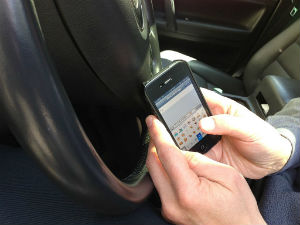
So, would YOU drive blindfolded? Of course not! What a silly idea. And, yet, far too many drivers do drive blindfolded – or the close equivalent. They drive distracted – look down at their cell phones, texting, talking on the phone, checking emails. Some engage in non-tech based distractions such as eating, talking to their kids in the back seat, or putting on make up. Regardless of the distraction, it is just as dangerous as driving with a blindfold on!!

People refer to these tragic episodes as “accidents,” perhaps because they know the people who caused the deaths of these precious people didn’t intend the result and perhaps because it is just too painful to believe that a person who is in a place they are lawfully allowed to be in, doing something they are lawfully allowed to do, could be needlessly killed, due to no fault of their own. The world is cruel and it is painful to think of such things. But these tragedies are not “accidents.” They don’t “just happen.” They don’t “have to happen.” And, yet, they do.

These tragedies occur because the drivers of these cars – a deadly machine if used improperly – chose to drive with a blindfold on. At that moment in time, for whatever reason, that driver chose not to control the potentially deadly machine they were operating and, instead, chose to take control of their cell phone. They made a choice to engage in reckless, deadly behavior and, as a result, an innocent person died. These tragedies are not “accidents,” they are the predictable result of reckless behavior. If you have checked your email, texted, or been distracted while driving, it doesn’t mean you are a highly skilled distracted driver – it just means you have been lucky. And the people that you drove by have been lucky, too. But, luck isn’t enough to save a life.

I am absolutely sure that the drivers who killed these precious cyclists, just like the drivers who have killed other cyclists, runners, pedestrians, passengers, and drivers, wish they could take back what they’ve done. I’m sure it changed their lives immeasurably, too, and that this is a shame they will carry with them forever.

We honor all the lives impacted by distracted driving when we acknowledge that we could just as easily be the driver as the cyclist and we vow not to drive blindfolded.

If you have been injured as a result of someone else’s actions, call Nelson Boyd today at (206) 971-7601.  We Care.  We Can Help.


Top 5 Tips for Hiring an Attorney

Posted on Tuesday, September 6th, 2016 at 10:41 am    

Dollar Bills

Sometimes, the process of hiring an attorney is just as stressful as the situation that led you to seek an attorney in the first place.  There are so many attorneys.  How do you know who to hire?  Do you hire the attorney who advertises on the side of a bus or do you dig a bit deeper?  AND, what really matters and what should you really look for when hiring an attorney?

1. Know what type of attorney you need. 

Law, like medicine, is extremely specialized.  The days when one attorney could practice every type of law are gone.  The law changes too quickly and the stakes are too high for any one lawyer to know everything about every type of law.  As a result, most attorneys focus on just a few areas of the law (although the Washington State Bar Association prohibits lawyers from using the word “specialize” in their advertising to explain what areas of law they practice, most lawyer advertising does include the areas of law where they focus their practice). You should be very wary of any lawyer who promises too much or advertises for cases in nearly every field of law.  It is an indication that their skill level in any one particular area may not be sufficient to handle your case, especially if it falls in a practice area in which they have only dabbled.  Instead, search for attorneys who practice the type of law that is matched to your legal problem and who have experience in that area of law.

2. Check out social media sites. 

Fortunately, there are enough social media sites available to consumers that they can shop for attorneys before actually contacting one.  We think the following sites are helpful to people looking for lawyers:
       a.       Avvo
       b.      SuperLawyers
       c.       Facebook
       d.      LinkedIn
       e.      Google+

These sites indicate the lawyer’s field of practice, their experience, their credentials, and endorsements from colleagues and former clients.

3. Look at law firm websites. 

Nearly all law firms have websites now.  The quality and content vary significantly.  Some obviously have a larger amount of “puffery,” while others have more substantive content.  Although it is tempting to be swayed by the amount of settlements or verdicts posted on a website, potential clients need to keep in mind that each and every case is different and that it is those differences, as much as the lawyer’s skill, that determine the outcome of any given case.  More importantly, no lawyer can guarantee a specific outcome or dollar figure on a case.

When viewing a particular lawyer’s biography, pay particular attention to their professional activities and credentials.  Do they belong to any professional associations?  Are those associations relevant to your legal issue?  Have they held leadership roles in those organizations or have they just paid dues to become a member?  Have they lectured or written on areas of the law that are relevant to your legal issue?  Have they won awards for their work as attorneys?  Being an active participant in professional associations is a good indicator that the attorney is well versed in the latest trends and techniques applicable to your case, and that they care enough about their clients to go the extra mile.

4. Talk to your friends. 

Ask your friends if they have hired attorneys or have attorneys as friends.  Find out if they were pleased with their attorney.  Did their attorney communicate with them well and explain the various steps of the case?  Were they treated with respect?  Did their attorney work hard for them?  Did their attorney appear to be experienced in the particular area of law that matched their legal need?  Were they pleased with the outcome of the case?  A friend’s recommendation can’t necessarily substitute for doing your own investigation, but it can give you a place to focus your search.

 5. Contact the attorney and ask questions. 

Most law firm websites have a “web form” or a way for you to contact them.  Some of the social media sites also have an email link to the attorney.  Of course, you can also call and ask to speak to the attorney.  Although the attorney cannot give you legal advice or tell you the outcome or value of your case without reviewing all the materials related to your case in depth, the attorney should be able to answer some basic questions about the area of law that applies to you, explain the process involved in resolving your case, and tell you about their law firm and how they handle cases.  They should also be willing to explain their fee structure.  Their responses, and their responsiveness, should give you a better idea of whether this attorney would be a good fit for your case.  You can also meet with several attorneys before making your final decision.

If you need a lawyer, please contact Nelson Boyd, PLLC at (206) 971-7601 and see our website at www.nelsonboydlaw.com.  If we can’t help you, we’ll be happy to refer you to another lawyer who can.

Download Nelson Boyd Law’s “Top 5 Tips for Hiring an Attorney” Article as a PDF